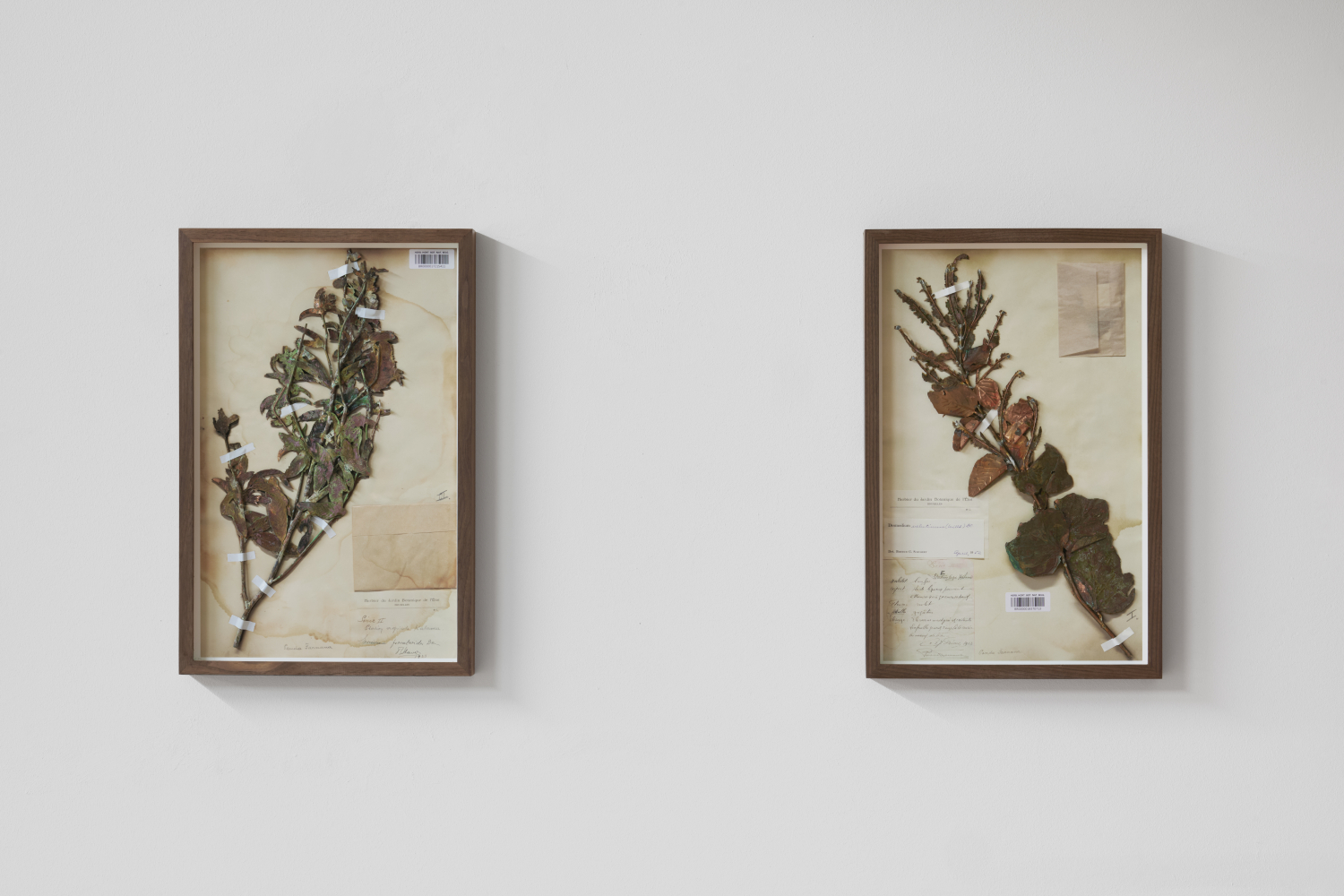
Herbarium series
- 2024-2026
- artwork
The agronomist Paul Panda Farnana (1888–1930), was the first Congolese person to study in Belgium before returning to the Congo. He worked at the Yangambi Tropical Agricultural Research Centre in Eala, one of the most important research centres on the African continent at the turn of the century.
During his time at the Eala botanical garden, Farnana drew on pre-colonial Congolese knowledge of plants and forests to support the Belgian presence in the country. His work was sent to Belgium and archived at the Botanical Garden in Meise. The ancestral knowledge of living things recorded by indigenous populations in Congolese herbariums suddenly changed status as it was studied in Belgian botanical gardens and renamed by European scientists who appropriated it. Farnana’s signature is still legible on the herbarium specimens he collected, but the indigenous name that was given to the plants is overshadowed by barcodes for archiving and Latin names.
In this series of artworks (12 in total), the plants are reproduced in copper, a material imported from the Congo to Europe since pre-colonial times and used by Belgium during the First World War to produce shells and bullets. The copper reproductions have been treated with a patina, meaning they will change in appearance over time. Like an organism, they can never be preserved in their original state. Just as a dried leaf in a herbarium loses small fragments, the copper reproduction will also deteriorate slightly.
In collaboration with:
Beau Disundi, production of the copper sculptures
Plantentuin Meise, Belgium, rights to use the herbarium pages from their collection